

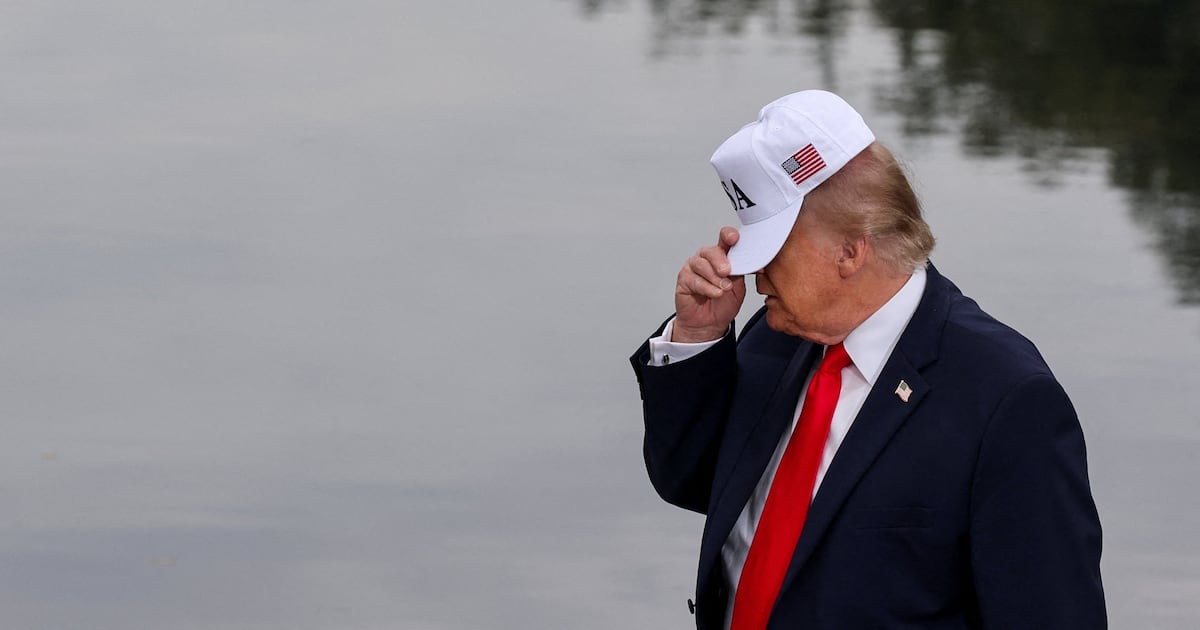
President Donald Trump said on Thursday that the US no longer needed a deal with Iran, claiming that “those days have long since passed”.
In a post on Truth Social, Mr Trump said Vice President JD Vance would instead turn his attention to what he described as corruption and crime in Democratic-led states.
Mr Vance, who had been an early point person for the Trump administration on Iran and tried to negotiate a deal in April, has said the war was why the Republicans lost the midterms.
We don’t need a deal with Iran
“We don’t need a deal with Iran. Those days have long since passed. We’ve got their money, hundreds of billions of dollars, and we’ve got their Strait,” Mr Trump wrote on Truth Social.
The President’s comments marked a shift from recent weeks, when he had repeatedly said the war would end after the midterm elections and that a deal with Iran remained possible.
The results of the November 3 vote dealt a bruising defeat to Mr Trump’s Republican Party, which lost its majority in Congress to Democrats.
Voters gave the state of the economy
Voters gave the state of the economy and the rising cost of living as their main concerns.
Secretary of State Marco Rubio said this week that Iran wanted to have a deal but insisted on making unreasonable demands.
“Iran would love a deal. The problem is the conditions they continue to place are absurd,” Mr Rubio said on Tuesday, adding that economic pressure would eventually force a rethink in Tehran.
Eventually the economic realities penetrate the skull
“Eventually the economic realities penetrate the skull of even the most radical lunatic. So I think as time goes on, I mean, that will have an impact.”
Iran analyst Trita Parsi said the most likely outcome is neither war nor peace, but an uneasy middle ground in which Mr Trump claims to maintain the US blockade on the Strait of Hormuz and sanctions on Iran, while gradually allowing them to lose their force.
Although that approach is likely to leave the US and Iran – as well as the entire region – at risk of renewed war, walking away would allow Mr Trump to avoid an agreement that could be seen as an admission that his war had failed.
The most likely scenario may prove to be
“The most likely scenario may prove to be neither war nor peace,” Mr Parsi wrote in a recent analysis.
After Mr Trump launched the war on Iran alongside Israel on February 28, Iran moved to choke off maritime traffic in the Strait of Hormuz, a waterway through which about 20 per cent of the world’s oil and liquefied natural gas shipments passed before the war began.
The disruption has driven up global fuel costs and contributed to higher prices for everyday goods in the US and beyond.
Oil prices rose around the time of Mr
Oil prices rose around the time of Mr Trump’s latest comments, erasing an earlier decline after Saudi Arabia increased its output to near prewar levels.
The US President had previously said the price of fuel would go down after the conflict with Iran ends.
On Tuesday, he said a resumption of military action against Iran was “quite unlikely” for now, and warned that Washington remained “locked and loaded” should developments in the Middle East change.
On Thursday, Mr Trump said Mr Vance, who had been involved in contact with Iran, would instead devote his “complete and total attention” to what he described as large-scale corruption in US states including Minnesota, California and Illinois.