


Yoon Geun-ilReporter입력 2026.11.22 07:45
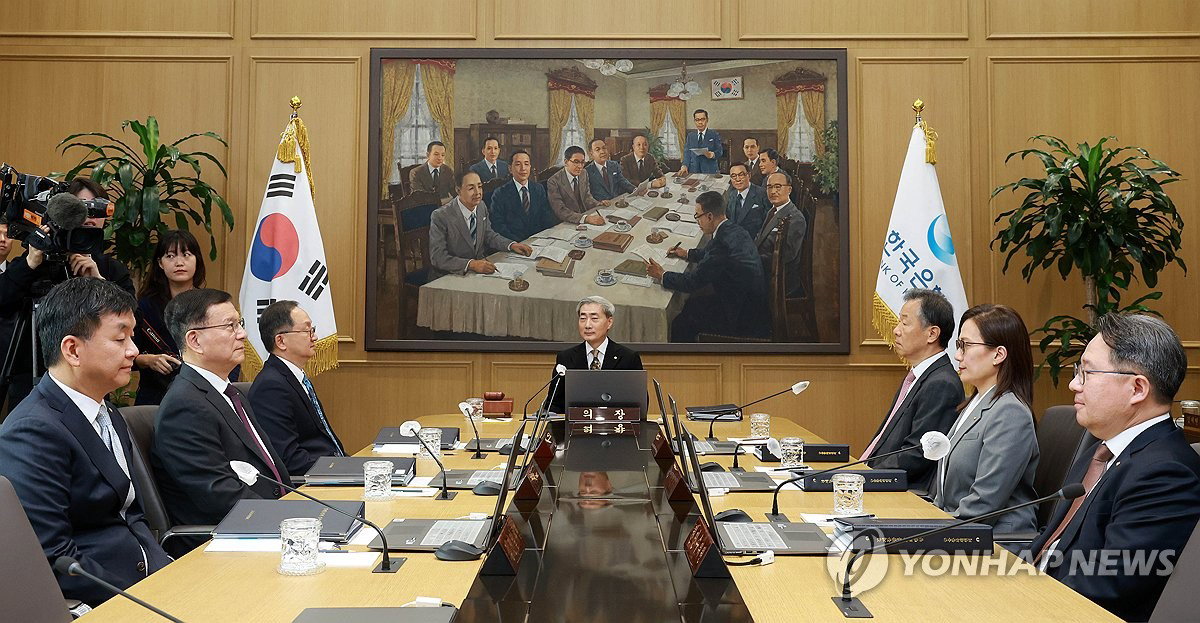
All six economic experts surveyed projected that the Bank of Korea’s Monetary Policy Board will raise the base interest rate on the 26th. The consensus is based on the judgment that growth remains centered on semiconductor exports and that upward price pressures, such as core inflation and exchange rates, persist. Some experts have also left open the possibility that additional hikes will continue into next year, with the final rate reaching 3.75% per annum.
Growth and inflation as grounds for a hike
The Bank of Korea has maintained the base interest rate at 3.00% per annum since adjusting it in August. The focus of the final monetary policy meeting of the year, to be held on the 26th, is whether the Monetary Policy Board will resume interest rate hikes after three months.
Experts cited the recovery of the economy, led by exports and facility investment, as the basis for a hike. According to the Bank of Korea, real gross domestic product in the third quarter grew by 1.0% from the previous quarter and 3.4% compared to the same period last year. While rising prices for export goods like semiconductors and growth in exports and facility investment led the expansion, private consumption fell by 0.2%, with the insufficient recovery of domestic demand cited as a burden.
Inflation trends also support the outlook for an interest rate hike. Consumer prices in October rose by 2.8% compared to the same month last year, and experts noted the trend of core inflation exceeding target levels, alongside additional upward pressure from high oil prices and exchange rates. Financial stability factors, such as household debt and the real estate market, were also mentioned as reasons for a hike.
Will there be a minority opinion for a freeze?
While the outlook on the hike itself was unanimous, opinions were divided on whether the Monetary Policy Board would reach a unanimous decision. Some experts speculated that one or two members might argue for a freeze, citing sluggish domestic demand and falling housing prices in certain regions.
Conversely, there are observations that a unanimous hike is possible, given that both growth and inflationary pressures persist. In particular, analysts noted that the exchange rate must be considered, as a widening interest rate gap with the United States could lead to a weaker won and higher import prices.
Differing outlooks on next year’s final rate
Regarding the interest rate path for next year, the most common projection was that it would stop at 3.50% per annum after one additional hike. Three out of six experts expected the hiking cycle to end with a single increase in the first quarter of next year. In this scenario, the Monetary Policy Board’s final base interest rate would be 3.50% per annum.
However, some suggested that if growth and inflation remain stronger than expected, rates could rise twice more next year to reach 3.75% per annum. On the other hand, there was also an opinion that since the base rate is already entering restrictive territory beyond the top of the neutral range following the November hike, the burden of further increases could be greater.
The movements of the U.S. Federal Reserve are also a variable that will affect the domestic interest rate path. While the Fed maintained its policy rate at 3.75–4.00% per annum at its October meeting, two members favored a 0.25 percentage point hike during the voting process. Experts generally consider the possibility of the Fed raising rates by 0.25 percentage points at its meeting on the 8th–9th of December to be high, and predicted that the interest rate gap between Korea and the U.S. and exchange rate trends would influence whether additional domestic hikes occur.
Previous ArticleEvidence of “Prtseek” usage in hacking attacks targeting 20 universitiesNext ArticleOverdue balances on credit lines for those in their 40s surge 82%… acceleration seen in the second half