



What tariffs has Trump introduced and why?
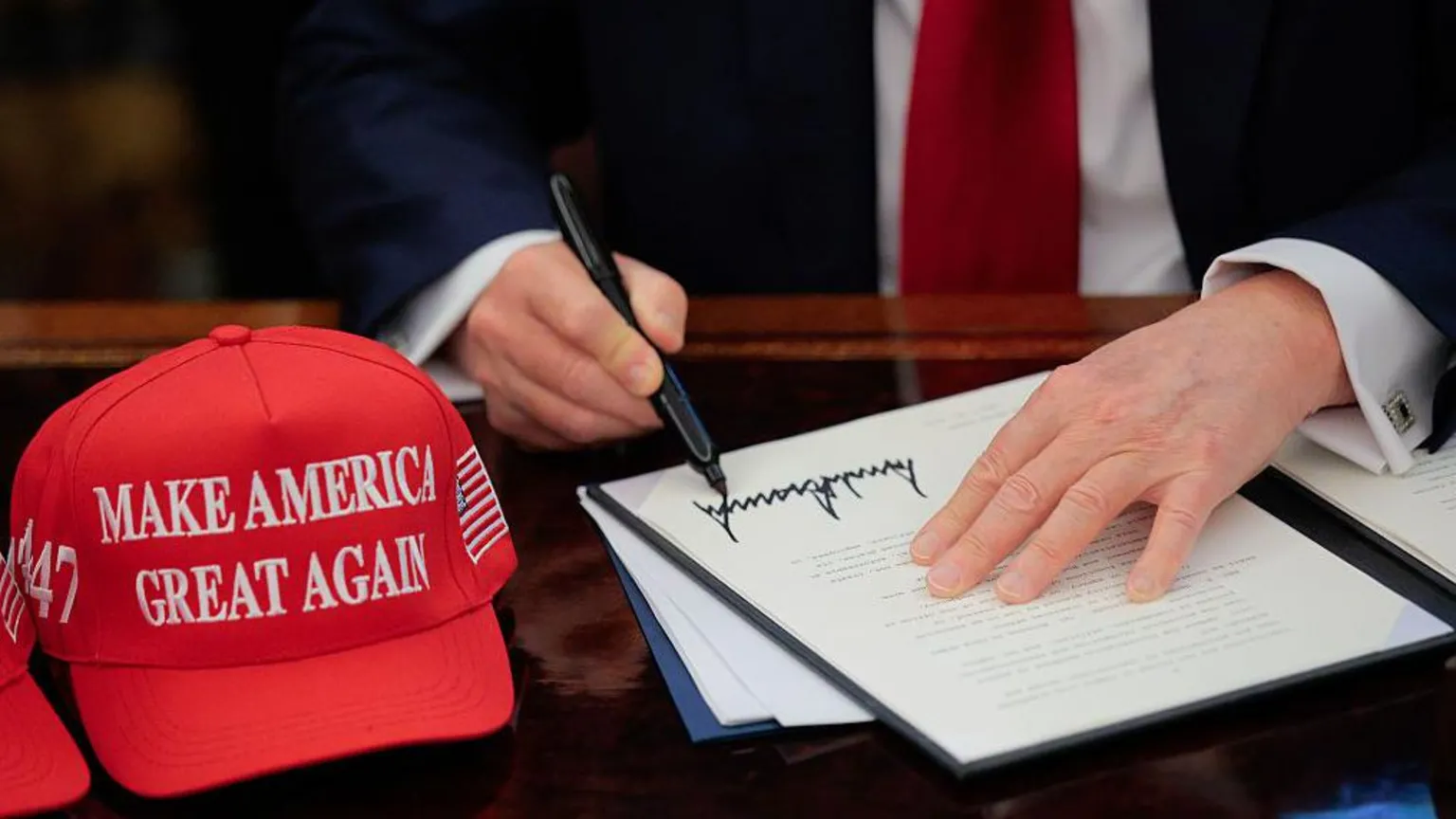
Tariffs have been one of US President Donald Trump’s favourite economic tools since he returned to the White House.
He argues these import taxes boost US manufacturing and create jobs. But critics say they have put up prices for American consumers and disrupted and damaged the global economy.
What are tariffs and how do they work?
Tariffs are taxes on imported goods.
Typically, the charge is a percentage of a good’s value.
For example, a 10% tariff on a $10 product would mean a $1 tax on top – taking the total cost to $11.
The tax is paid to the government by companies bringing in the foreign products.
These firms may pass some or all of the extra cost on to their customers, which in this case means American consumers and other US businesses.
Companies may also decide to import fewer goods.
Why is Trump using tariffs?
Trump argues tariffs increase the amount of tax raised by the government, encourage consumers to buy American-made goods and boost investment in the US from foreign companies.
Parts of the US were hollowed out economically when free trade deals resulted in industrial jobs heading overseas.
Trump also wants to reduce the US trade deficit – the gap between the value of goods it buys from other countries and those it sells to them.
The president argues that countries that sell more products to the US than they buy from it are cheating the US and that tariffs correct this imbalance.
What did the Supreme Court say about Trump’s tariffs?
In February 2026, the US Supreme Court said that Trump had exceeded his authority when he used emergency powers to introduce tariffs on specific countries without approval from Congress.
That ruling affected all tariffs Trump brought in under the International Emergency Economic Powers Act (IEEPA).
That includes the first tariffs Trump announced in early 2025 which targeted Mexico, Canada and China.
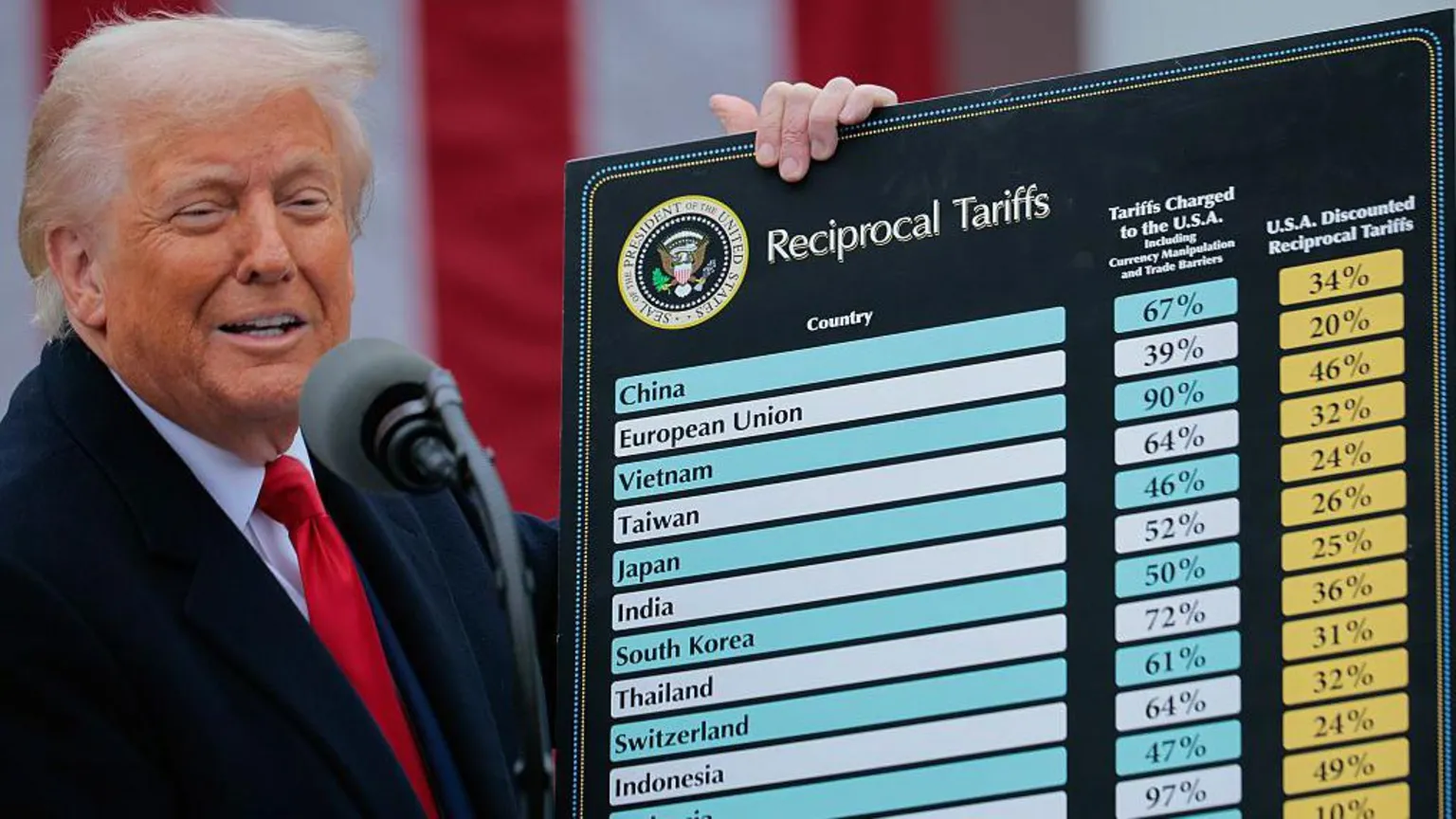
The ruling also covers those announced on Trump’s so-called “Liberation Day” in April 2025, when the president set out tariff rates of up to 50% for dozens countries, including Cambodia, Vietnam and Malaysia.
About $100bn (£74bn) has since been refunded to companies that paid those “Liberation Day” tariffs.
This represents roughly 60% of the roughly $166bn collected under the government policy, according to a court filing.
Around $29bn in potential refunds are still being reviewed by trade authorities, while a further $1.6bn remains unpaid because importers have not provided the banking details needed to process payments.
Has that ruling killed Trump’s tariff policy?
No. The White House has been looking at alternative ways.
After the Supreme Court ruling, Trump used different legislation – Section 122 of the Trade Act of 1974 – to impose temporary 10% tariffs on all global imports.
Those tariffs expired on 24 July, but have been replaced by tariffs of 10% to 12.5% on all goods from the top 60 US trade partners, including the UK, the EU and China.
In late November, Trump announced new duties against 14 partners, including China, the European Union and 12 other jurisdictions, which follows other similar moves made in the wake of the SCOTUS ruling against the administration.
The actions have been taken under Section 301 of the Trade Act of 1974, a law that allows the US to probe and retaliate against foreign trade practices.
The Trump administration has begun arguing that the tariffs target what it calls “overcapacity” or that some countries are making more goods than they need and then selling them cheaply in the US, which makes it difficult for American companies to compete.
Over the summer, 25 US states – all Democrat-controlled – launched legal action that calls these tariffs “arbitrary, capricious, and contrary to law”. The lawsuit accuses the administration of using forced labour as a pretext to continue tariffs.
Trump also used Section 301 to levy a 25% tax on certain goods from Brazil, claiming that Brazilian policies have harmed US trade.
In August, he announced a 50% tariff on a wide range of goods imported from Canada, in retaliation for what he called “unequal treatment” of US cars, dairy and alcohol, under Section 338 of the Tariff Act of 1930.
Those tariffs cover about $20bn (C$28bn; £14bn) of Canadian imports, or about 5% of all goods Canada sends south.
Which tariffs apply to the UK?
The UK had already negotiated a 10% tariff with the US on most goods in June 2025.
The latest announcement does not change that, but tariffs have been removed on whisky imports, something Trump had said he would do after the King’s state visit to the US earlier this year.
In 2024, the UK exported about £58bn of goods to the US – mainly cars, machinery and pharmaceuticals.
Under the terms of the 2025 deal, the 10% rate applied to the first 100,000 UK vehicles exported every year – roughly the number sold in 2024. Additional cars face the standard 25% tariff.
UK steel exports to the US are also subject to 25% duty, compared to the 50% rate which applies to steel and aluminium products from the rest of the world.
Have prices gone up for US consumers?
Many firms said they would pass on the cost of tariffs to US customers, including Target, Walmart and Adidas.
Some products have become more expensive – including toys, appliances and furniture as well as certain foodstuffs.
The cost of some goods manufactured in the US using imported components has also gone up.
In October 2025, a study by Goldman Sachs estimated that about 55% of the tariff charges were passed on to US consumers.
And in April, a Federal Reserve study said Trump’s sweeping 2025 tariffs had caused a surge in inflation this year.
The White House has always maintained that it will take time for the tariffs to pay off, pointing to promises by firms and countries to make big investments in the US.
Despite the new barriers to trade, US imports actually increased by 4% in 2025.
How have tariffs affected the global economy?
Trump was accused of throwing the global economy into turmoil when he announced the first tariffs of his second presidential term in early 2025.
Share prices around the world fell sharply, as did the value of the dollar.
Although the US currency and global financial markets have since largely recovered, the ongoing uncertainty around Trump’s tariff policy has continued to destabilise international trade.
Some US allies have looked to alternative markets, causing what some economists describe as a “re-wiring” of global trade.
In January 2026, the International Monetary Fund (IMF) said the tariffs had “definitely [slowed] down global activity”, and warned further trade tensions could threaten economic growth.
Since then the Iran war has restricted the global supply of oil and fertiliser, pushing up prices.
United States
Donald Trump
Canada
Mexico
China
Steel industry
Global trade
Trump tariffs
Car industry
International Business
European Union