


The 44-day Patriotic War in 2020 and the anti-terrorism measures carried out in September 2023 did more than fully restore Azerbaijan’s territorial integrity and sovereignty. These developments fundamentally reshaped the political and geopolitical landscape of the South Caucasus, challenging a regional order that had taken shape over decades and creating new realities with far-reaching implications for the region’s future. Azerbaijan’s military success was underpinned by a long-term national strategy, strong political will, economic development and sustained diplomatic efforts.
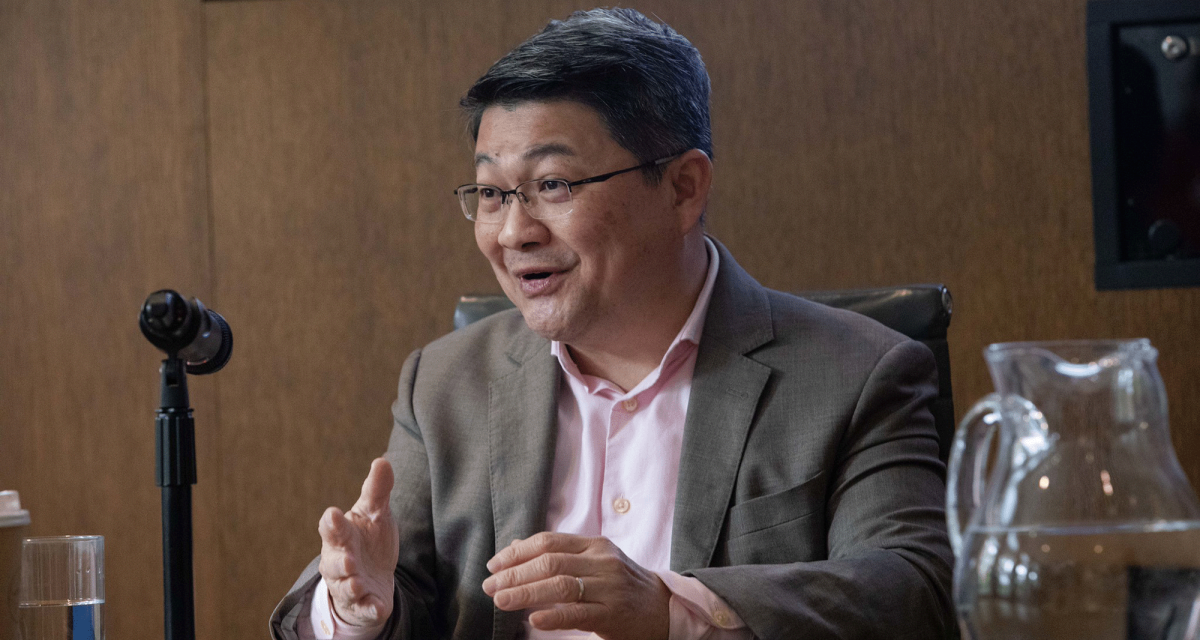
In an interview with News.Az, Zaur Mammadov, Associate Professor at the Academy of Public Administration under the President of the Republic of Azerbaijan and a political analyst, said the historic Victory achieved under President Ilham Aliyev’s leadership was significant not only because it brought an end to Armenia’s occupation policies and separatism in Karabakh, but also because it fundamentally altered the geopolitical balance of power in the South Caucasus.
According to Mammadov, the region’s historical development demonstrates that Azerbaijan has long had to navigate a complex political environment shaped by the competing geopolitical interests of major powers.
Various centres of influence have sought to preserve
“Various centres of influence have sought to preserve their positions in the South Caucasus by using the Armenian factor as a political instrument to shape regional developments,” he said, adding that, from this perspective, Azerbaijan’s Victory should be viewed not merely as the outcome of a military confrontation, but also as a turning point that overturned long-established geopolitical calculations.
“Azerbaijan’s Victory represents far more than military superiority over Armenia and the separatist forces in Karabakh. It also marks the failure of geopolitical designs that ran counter to Azerbaijan’s national interests and the restoration of historical justice. Azerbaijan has demonstrated that even in a challenging international environment, national objectives can be achieved through strong political will, economic capacity and a carefully planned strategy,” Mammadov emphasised.
The political analyst believes Azerbaijan’s experience is particularly noteworthy when assessing the ability of small and medium-sized states to pursue their interests within the international system.
Maintaining an independent foreign policy and achieving military
“Maintaining an independent foreign policy and achieving military and political objectives in a region where the interests of major powers intersect requires extensive preparation and strategic consistency,” he said. “Azerbaijan’s success has highlighted the importance of effectively coordinating state governance, diplomatic engagement, economic re
The expert added that, in this context, the military operations conducted by the Azerbaijani Armed Forces during the 44-day war also deserve particular attention. He stressed that the application of modern technologies, flexible command and control of combat operations, and the coordination of different military capabilities have made Azerbaijan’s wartime experience a valuable case study for international military analysts.
Mammadov emphasised that the factors behind this success cannot be reduced to the military operations of 2020 alone. He argues that the political and economic foundations of the Victory were laid during the presidency of National Leader Heydar Aliyev.
In the early 1990s, Azerbaijan faced profound challenges
“In the early 1990s, Azerbaijan faced profound challenges stemming from a military and political crisis, economic hardship and weak state institutions. The ceasefire reached in May 1994 created an important opportunity to consolidate statehood, promote economic development and build the military capabilities needed for the future,” he said, adding that the signing of the “Contract of the Century” in September of the same year accelerated Azerbaijan’s integration into the international economy while strengthening the country’s financial resources and political standing.
According to the analyst, President Ilham Aliyev’s continuation and adaptation of this strategic course after assuming office in 2003 enabled Azerbaijan to reach a qualitatively new level of military and political capability.
“The modernisation of the armed forces, development of the domestic defence industry, expansion of energy and transport projects, and strengthening of international partnerships created the conditions necessary to resolve the Karabakh issue,” he stressed.
The expert noted that, for many years, Armenia’s
The expert noted that, for many years, Armenia’s political leadership had assumed that the status quo resulting from the occupation would remain unchanged.
“At certain points, the emergence of further territorial claims reflected the persistence of this political approach. However, Azerbaijan’s steady rise in military, economic and political strength, culminating in its military Victory in 2020 and the full restoration of sovereignty in 2023, demonstrated that these assumptions were fundamentally flawed,” he pointed out.
Mammadov believes the consequences of the war have influenced not only Azerbaijan’s security priorities but also its broader regional political agenda. He said that, following the liberation of Karabakh and East Zangezur, the country had gained new strategic opportunities.
Among the most important are the reopening
“Among the most important are the reopening of regional transport links, the establishment of transport connectivity between mainland Azerbaijan and the Nakhchivan Autonomous Republic, and the issue of the peaceful return of Western Azerbaijanis to their ancestral homes,” he said.
According to the expert, the restoration of transport and economic links envisaged in the trilateral statement of 10 November 2020 has the potential to enhance the South Caucasus’s geoeconomic importance. He added that ensuring connectivity between mainland Azerbaijan and Nakhchivan is significant not only for the country’s transport security but also for expanding regional cooperation along East–West and North–South routes.
“At the same time, the growing prominence of the Western Azerbaijan issue on the political and diplomatic agenda has become another important element of Azerbaijan’s post-war policy,” he said, adding that the central objective in this regard is to create conditions for Azerbaijanis displaced from the territory of present-day Armenia at different periods to return to their ancestral homes in safety and dignity.
The new realities emerging after the war have
“The new realities emerging after the war have also affected Azerbaijan’s position in international relations. The country now plays an important role not only in South Caucasus security affairs but also in energy, logistics and economic cooperation across the wider Eurasian region,” he said.
The expert added that Azerbaijan’s growing engagement within the Organization of Turkic States, expanding relations with Central Asian countries, energy cooperation with the European Union, and developing ties with the United States and China were further strengthening its geopolitical and geoeconomic significance.
“These developments create additional opportunities for the country to serve as an important platform for cooperation among different political and economic centres of power,” Mammadov noted.
The 44-day war and the anti-terrorism measures
“The 44-day war and the anti-terrorism measures of 2023 transformed Azerbaijan into one of the principal actors shaping the new realities in the South Caucasus. Today, our country’s role extends well beyond the region. Azerbaijan is assuming an increasingly important position in the Turkic world, in relations with Central Asia, in Europe’s energy security, and in international transport projects. This demonstrates that the political and economic consequences of the military Victory are taking on a lasting character,” he said.
In the analyst’s assessment, Azerbaijan’s principal challenge now is to translate its historic Victory into a long-term strategic advantage by strengthening national security, ensuring sustainable economic development and consolidating its international position.
From this standpoint, the significance of the Victory cannot be measured solely by the events of 2020 and 2023. Its long-term implications are reflected in Azerbaijan’s growing ability to shape regional developments, its evolving position within the international system and the opportunities it has created for future development.
“Azerbaijan’s military Victory has therefore ushered in a new phase marked by the consolidation of its position as a regional power and the expansion of its influence across a broader geopolitical landscape. The sustainability of this process will depend on how effectively the country combines its military advantages with economic strength, diplomatic engagement and long-term strategic planning,” Mammadov said in conclusion.