


Student-led protests return to central Paris this weekend. Here is what visitors need to know about safety, curfews and transport before deciding to travel.
Jolyon ZivkovNov 1, 2026
Table of contents
- Deadly security risks trigger new warnings for 13 nations
- Met Office issues 5-hour fog alert for 36 UK areas
- U.S. and Canada Warn of Mass Casualty Threat in Moscow
Paris is bracing for another weekend of mass demonstrations over living costs and education reforms, leaving many would-be visitors asking whether it is still safe to travel to the French capital right now.
Overall security picture: alerts, protests and daily life
Publicly available government travel advisories from countries including the United States, United Kingdom, Australia and Germany continue to rate France as a destination that can be visited with caution, rather than a place to avoid altogether. The current United States advisory, updated in late October, keeps France at Level 2, which means travelers are urged to exercise increased caution because of terrorism and civil unrest but are not advised to cancel trips outright. Similar wording appears in recent guidance from Australia’s Smartraveller service and other European governments, which highlight frequent demonstrations but do not recommend blanket postponement of travel.
Reports from French and international media describe the latest protests as part of a broader, largely youth-led movement focused on education policy, housing and living costs. Coverage of the most recent Saturday marches in Paris and other major cities indicates that daytime rallies have been mostly peaceful, with a festive atmosphere in many places and families and students among the crowds. However, journalists on the ground also note that some gatherings in Paris and a few other cities have ended with tear gas and scattered property damage after small groups clashed with police at night.
Despite images of burning trash and broken windows circulating on social media after unrest on 17 October, most of Paris has continued to function relatively normally on non-protest days. Tourist districts such as the Eiffel Tower area, the Louvre, the Marais and Montmartre have remained open, with museums, restaurants and hotels operating on usual schedules apart from standard public holidays. Travel advice from several governments stresses that demonstrations tend to be localized to specific routes and plazas, so visitors who avoid the immediate protest zones are unlikely to encounter serious disruption.
Authorities have nonetheless kept the national security alert at a heightened level because of the combined risk of terrorism and mass gatherings. Official advisories emphasize the importance of staying aware of surroundings in crowded public places, including train stations, Christmas markets, large shopping streets and demonstration routes, especially during weekends when rallies are announced in advance.
What is planned in Paris this weekend
According to international news coverage and city information sites, a new round of nationwide protests is scheduled for this weekend, centered on Saturday, 31 October, with further mobilizations expected on Thursday, 5 November. Student organizations, unions and activist groups have called for marches in Paris and other major cities, continuing a sequence of large weekend rallies that began earlier in the month.
Paris city tourism information pages and local listings indicate that a major demonstration is authorized in the capital on Saturday afternoon. Marches in recent weeks have typically followed routes between central gathering points such as Place d’Italie, Place de la République, Nation and the areas around the National Assembly. Exact routes and times for each event are usually confirmed closer to the day, but official notices this week highlight restrictions and diversions affecting several central arrondissements from the late morning into the evening.
Separate advisories from foreign ministries and consulates in Paris note that additional, smaller gatherings are possible around symbolic government sites and university areas in the city. Travelers arriving this weekend should expect visible police deployments and crowd-control barriers near the main protest routes, especially on Saturday afternoon and evening. Demonstrations elsewhere in France, including Lyon, Marseille, Lille, Toulouse and Nantes, may also be sizable, but reports so far indicate that tourist visits to Paris and other cities have continued around them.
Travelers should be aware that a large public-sector strike is already announced for Thursday, 5 November, which could bring broader disruption to trains, urban public transport and some public services for that day. At this stage, available information suggests that Sunday and early-week travel outside specific protest and strike dates is expected to be much closer to normal, although additional actions can always be called at short notice.
Curfews, restricted zones and how they affect visitors
Recent prefectural orders for Paris, summarized on city tourism and administrative websites, outline temporary bans on unregistered marches and spontaneous gatherings in parts of the city center during the protest period. For this weekend, restrictions apply overnight around key central neighborhoods, including areas near Place de la République and the busy Châtelet–Les Halles hub. Local information notes that from the evenings of 29 and 30 October through the early morning of 2 November, there are time-limited prohibitions on certain kinds of processions and on carrying items considered potential projectiles or protective gear to demonstrations.
Some travel industry advisories state that an 11 p.m. to 6 a.m. curfew has been introduced on Saturday and Sunday nights in a narrow security perimeter around the main protest hotspots, aimed primarily at preventing looting and vandalism after the organized marches disperse. The impact for tourists staying in most neighborhoods is described as limited, although visitors with hotels directly bordering République or Châtelet may experience police checks, temporary street closures and noise late into the night.
So far, there is no indication of a citywide curfew for Paris, and public information from local authorities and tourism bodies stresses that restaurants, bars and entertainment venues remain open in districts outside the restricted zones, subject to standard licensing hours. Museums and major attractions are operating normally during the day, with the caveat that closures can occur at short notice if managers judge that crowds or nearby unrest pose a risk.
Foreign travel advisories recommend steering clear of any active demonstration, even if it appears peaceful, and moving away if tensions rise. Visitors are also advised to avoid wearing or carrying politically themed symbols near rallies and to follow instructions posted on signage regarding prohibited items in security perimeters. For those whose accommodation lies inside or close to a restricted area, hotel staff can provide the most current guidance on local access rules and any check-in or check-out complications during protest hours.
Transport disruptions: metro, RER and airports
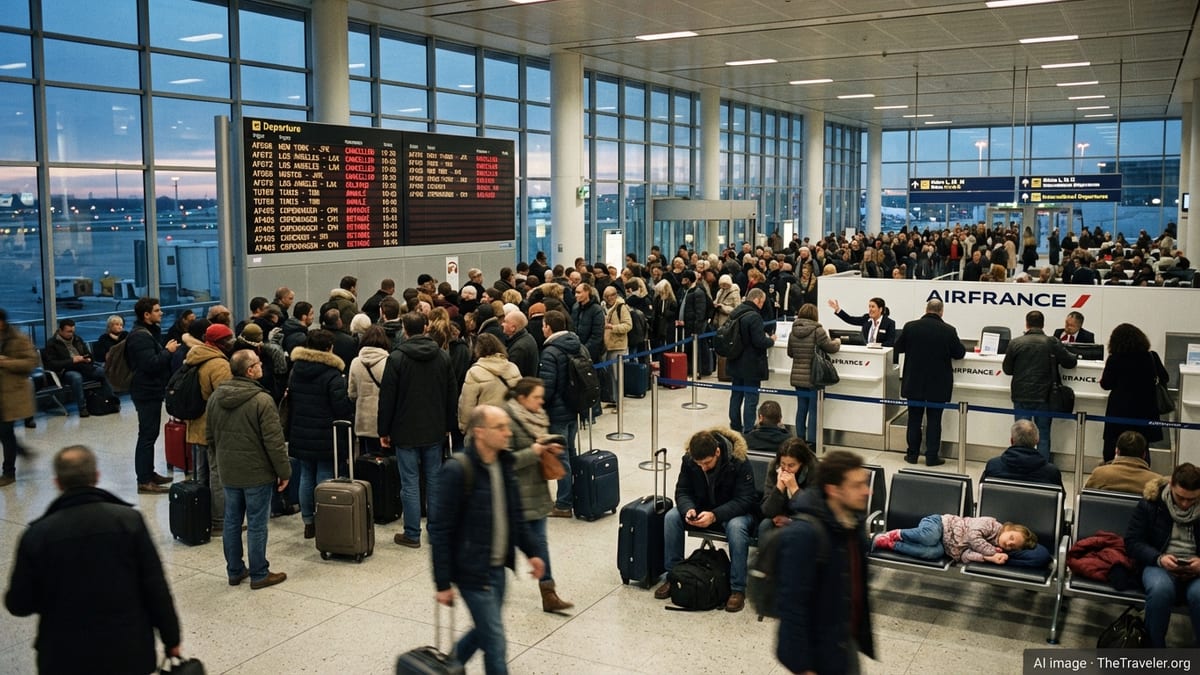
Transport operators in the Paris region, including the RATP network and regional rail services, have warned of intermittent disruptions linked to both engineering works and industrial action over the All Saints holiday weekend and the following week. Schedules published for 31 October to 1 November show reduced frequencies or partial closures on several metro and tram lines due to planned maintenance, compounded in some cases by strike-related staffing shortages.
Recent bulletins highlight interruptions on metro lines such as 6 and 11, as well as on tram routes including T3a and T3b, during portions of the weekend. The regional RER B line, which connects central Paris with Charles de Gaulle Airport, is flagged for disrupted service on its northern section over the same dates, with replacement buses on some segments and longer transfer times. Travelers heading to or from the airports are advised, in publicly available guidance from operators and city information sites, to allow extra time and to verify routes on mobile apps on the day of travel.
Local news and traveler reports also point to temporary closures of specific metro and RER stations along protest routes during large demonstrations, particularly around hubs such as République, Bastille, Nation and Champs-Élysées – Clemenceau. These closures can last several hours while marches pass and may be announced only shortly in advance. Buses that normally cross central squares used for rallies are frequently diverted or cut short, although service elsewhere in the network generally continues.
Despite these challenges, there is no current suggestion in public information that airports themselves are shut or that long-distance train travel to and from Paris is broadly suspended because of the protests. International rail services such as Eurostar and TGV routes are operating, though they may experience localized delays on days of major marches or strikes. Travelers are encouraged to build in margin for connections and to stay flexible about routes, especially on Saturday and on the announced national strike day of 5 November.
Practical advice for travelers deciding whether to come
Foreign ministries, tourism boards and long-standing Paris travel resources broadly advise that most visitors can still proceed with trips to the French capital, provided they remain informed and adapt plans around protest days. The key message in many recent advisories is that demonstrations are a recurring feature of public life in France, and that the majority of tourists are able to sightsee and move around the city with limited disruption by staying away from specific hotspots at specific times.
Prospective visitors weighing whether to travel this weekend are encouraged to monitor national travel advisories for their home country and to consult their airline, rail operator or tour company for the latest operational updates. Travelers who have already booked nonrefundable arrangements but feel uneasy can explore options such as changing hotel locations to quieter neighborhoods away from central government squares or shifting key sightseeing plans to mornings and early afternoons, before the typical peak of demonstrations.
On the ground in Paris, practical preparations include downloading official transport apps, checking same-day news updates about planned marches and strikes, and allowing additional time for journeys through central areas. Travel guidance consistently emphasizes keeping identity documents with you, securing valuables against pickpocketing in crowded places, and having a simple back-up plan if a station or street is suddenly closed.
For now, the balance of publicly available information suggests that Paris remains accessible for tourism, with heightened but manageable risks concentrated around scheduled protests and occasional night-time unrest. Travelers who are comfortable with a dynamic urban environment and who are willing to adjust their movements around demonstrations are generally considered able to visit, while those seeking a completely calm city break may prefer to look at dates outside the current protest calendar.