


While not necessarily known for its dedication to documentary programming, the New York Film Festival provided ample space for rich exploration of the medium in its 64th edition. The selection of new and repertory titles alike encompassed a broad spectrum of approaches for interrogating that pernicious thing we call “truth.”
This contentious quandary shaped several titles that screened in the festival, including Ava DuVernay’s 14th. A sequel to her Oscar-nominated 13th, which examined the history of the Fourteenth Amendment, the film’s timeliness was almost overshadowed by its controversial use of AI-generated animation meant to simulate stereoscopic archival photographs of Black American life. If attempts at restorative justice wield digital tools that are currently exacerbating the real violence of climate change and global warfare, what do those attempts ultimately carry?
To that point, the fest’s most controversial film NAZA(dirs. Yuval Abraham and Rachel Szor) consists of rooftop interviews with the IDF explaining their use of AI in targeting civilian infrastructure during the ongoing genocide against the Palestinian people. The film spurred a wave of protests (and counter-protests) outside Alice Tully Hall, soon followed by a van emblazoned with declarative statements accusing the film’s directors of misleading the public.
Another holdover from the Venice Film Festival, Laura
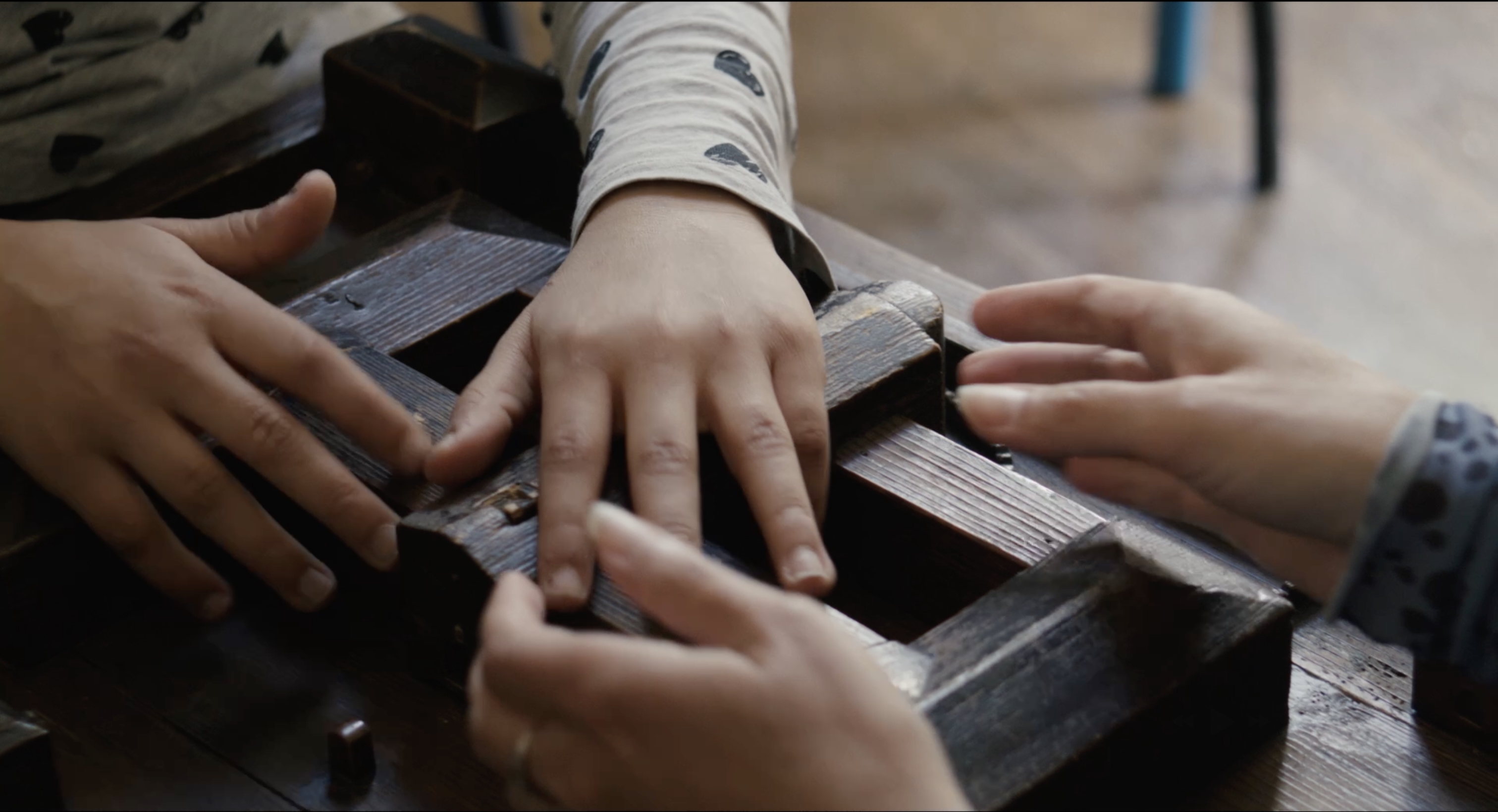
Another holdover from the Venice Film Festival, Laura Poitras and Rachel Lauren Mueller’s half-hour “horror” film They’re Hereexamined the rhizomatic efforts of community members in Minneapolis counter-surveilling ICE during Operation Metro Surge this past winter. The featurette’s North American premiere comes at a moment when ICE operations continue unabated, with the shooting of 28-year-old Oscar Belgal by ICE agents in the Bronx, occurring halfway through the festival, casting the film’s urgency in stark relief.
Speaking, in part, to our troubled present was the roundtable discussion titled “Currents and The Edges of Cinema.” Using the eponymous introduction of her new book as a springboard to touch on the Currents strand’s history at the festival, Erika Balsom moderated the discussion with filmmakers Tiffany Sia, Éric Baudelaire, and Peggy Ahwesh. Most salient was the moment when Sia contextualized her practice in relation to the preceding decade as one of “global insurgency.” The parting tone was one of prevailing, if for me tenuous, optimism in documentary filmmaking as a durable method of counter-hegemonic resistance against global fascism.


They’re Here.
South of Tehran.
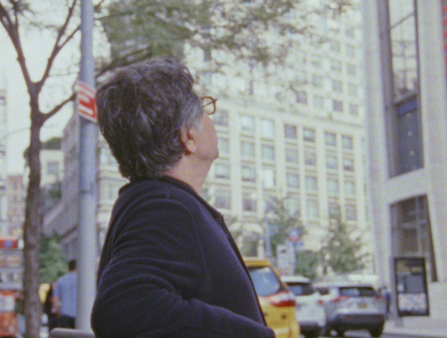
Indeed, the ghost of an anti-fascist like Pier Paolo Pasolini was felt in the inaugural entry of the festival’s Encounters initiative, South of Tehran. An homage to Agnès Varda’s portrait of Pasolini decades earlier—Pier Paolo Pasolini — Agnès Varda — New York — 1967(2022), shot while both filmmakers attended the fourth-ever NYFF, Kleber Mendonça Filho turned his camera onto Jafar Panahi, fusing the sounds of the filmmaker’s homebase city with the sights of New York from last year’s festival.
Ultimately, the most riveting work I saw this
Ultimately, the most riveting work I saw this year remained firmly fixed in the past. The newly restored films by Artavad Palechian, which obliquely chronicled the second half of the twentieth century in the Soviet Union, brimmed with boundless creativity informed by a sensibility regarding the world anew. But these films were produced no later than the early 1990s. Where can we find that level of fecundity in a perilous, deliberately isolating moment for cinema as a democratic firmament?
None of the succeeding films in this dispatch directly answer this question. What they do attempt, in their various methodologies, is to bridge the local and the global, contemplating that precious question of the I which I recognize in the perennial You. I can’t imagine a more fitting forum for this essential practice than within the sprawling cosmopolitanism of a place like New York City.
The obsession of the hoarder, typical or otherwise, is one affixed to preserving a memento of the past, its historical contours gradually fading into the ether of memory. Mani Haghigi’s I Deserve a Lover Whose Every Rise Sets Fiery Dooms Across the Skies skirts the psychological wellspring of this tendency, offering a prismatic portrait of two artists inspired and informed by the ghosts of their nation’s historiography.
Haghigi’s documentary adopts a wryly urbane tone
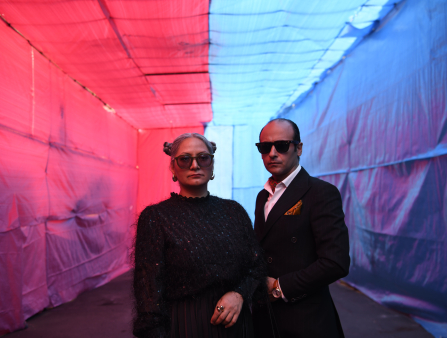
Haghigi’s documentary adopts a wryly urbane tone in its study of artists Nasser Bakhshi and Roghayeh Najdi, whose deliberately disarming personae are of a piece with Haghigi’s fiction work. While Bakhshi and Najdi offer brief glimpses of their practice and personal histories, an element of guardedness nevertheless persists, leaving the film’s formal playfulness only fitfully realized
Rather than analyzing Bakhshi and Najdi’s place within the ecosystem of contemporary Iranian art, the film largely consists of fragmented passages that gesture toward the obscured histories of Najdi’s hometown of Tabriz. Sex workers and queer men patronizing spas are glimpsed in recuperated photographs, but Haghigi doesn’t build upon this material to plumb the contours of the archive with rigor. The result is a Frankensteinian film of disparate aesthetic pleasures that, while beguiling in the moment, ultimately fall short of the dizzying heights set by the reflexivity indicative of Iran’s cinematic lineage.
I Deserve a Lover Whose Every Rise Sets Fiery Dooms Across the Skies.
For the Moon.
Joy of Joys.
In a brief moment of Eric Baudelaire’s For the Moon, a student traverses the halls of the National Institute for Blind Youth in Paris, the camera following closely behind. It instantly reminded me of a similar moment in Frederick Wiseman’s Blind (1986), though the comparisons begin and end with any formal parallels both filmmakers employ. While Wiseman privileged studies of people navigating institutions, Baudelaire gives his subjects more free rein to take command of their representation onscreen.
Indeed, much ofFor the Moon consists of the film’s
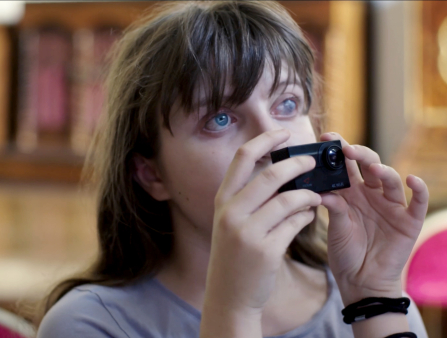
Indeed, much ofFor the Moon consists of the film’s subjects, all girls, sharing their desires and everyday travails to the camera. One girl, Kadiatou, has a natural penchant for spontaneous lyricism, crafting poems and remarks, one of which gives the film its title. Iris is another girl who is preparing herself to undergo enucleation so she won’t experience debilitating pain from her eyes while riding the roller coasters of the world. It’s a credit to the film that the sensibilities and personalities of these girls clearly shine through, imbuing it with a palpable intimacy.
That intimacy is matched by the tactile imagery filmed by the girls, which raises a scopophilic question about the function of the gaze within an inclusive practice. Baudelaire and his accomplished crew (which includes cinematographer Claire Mathon and editor Claire Atherton) receive top billing in the film’s credits, problematizing the democratizing overtures the production purportedly offers its subjects. That said, For the Moonultimately captivates by dint of the aleatory thrust that governs its footage. When, for example, the camera’s closed lens yields vibrant hues of violet while Iris sings along to pop music in her bedroom, the sensation is tremendously moving.
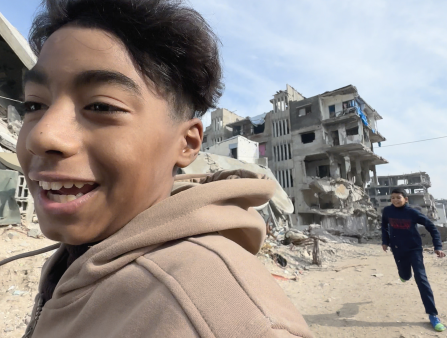
“Joyful” isn’t an adjective usually associated with Jonathan Glazer. Yet his featurette Joy of Joys gladly trades the austerity of Glazer’s fiction features (including, most recently 2023’s The Zone of Interest) for an inquisitive, nearly panoptic gaze of several cameras trained on (and by) children as they wander through the recording booths of Abbey Road Studios, capturing the comparatively famous artists like Olivia Rodrigo and Jarvis Cocker recording takes for the charity album Help(2).
One of the film’s unassuming pleasures
One of the film’s unassuming pleasures is its attentiveness to the present moment. Culled from three days of footage captured by Glazer, his crew, and a tiny bastion of 6-9 year-old filmmakers, Joy of Joys revels in the intuitive movement of handheld shots captured by children exploring their newly-gifted tools. The “amateur” quality of these shots formalizes a dialectic between students and masters, putting adults and children on relatively equal footing with abundant charm.
When Glazer removes the camera from the film’s dominant milieu and intersperses glimpses of ebullient children at play in Ukraine, Gaza and Yemen, the effect is paradoxically expansive and flattening. The film’s attempt at eliciting compassion from audiences who, presumably, remain unmoved by the plight of these children is well-intentioned, but it also reeks of an antiquated liberalism. If this is Glazer’s “We Are the World”, it’s one that blithely ignores the geopolitical constructions that partition and isolate children from one another. That may lie outside the scope of this film’s ambitions, but ending on a James Baldwin quote (“The children are always ours, every single one of them…”) that has made its rounds on social media only underscores the limitations of those ambitions.
Bardi.
Overt Listening.
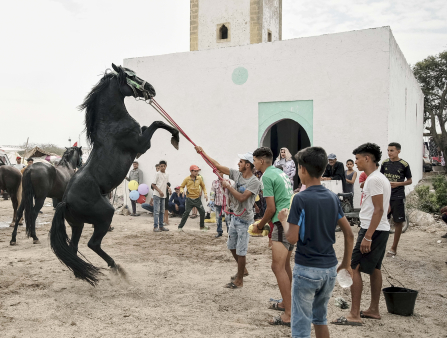
Tala Hadid’s Bardi refuses neat categorization as either an ethnographic study or a work of performance art. By denying the viewer an easy entry point into the lives of its subjects, the final result of four and a half years of footage shot in a small village in central Morocco mythologizes the boys whose rite of passage into manhood is contingent on a set of rituals that span half a millennium.
The film follows several faces of adolescents
The film follows several faces of adolescents and the older men guiding them in Tbourida, a succession of equestrian military parades rooted in Arab-Amazigh customs. The thoughts of these subjects are conveyed through voiceover narration that assumes mythic proportions, a formal device that Hadid purportedly employs to inspire a sense of play in the proceedings. Yet while this gesture is designed to imbue Hadid’s subjects with rich historical depth, it too often produces an ambivalent space of speaking for rather than through its subjects. By the time a climactic earthquake arrives,Bardi’s equivocation of the dramatic and the quotidian feels desultory as often as it does revelatory.
What gives the second entry of Hadid’s planned trilogy on Moroccan history and culture some value is its willful negation of any conventional narrative imposed on its subjects. While one young boy voices his concerns about the revelation that he is allergic to the steeds he longs to ride, the film applies this segment like a square in a patchwork quilt. Additionally, the structuring device of Spanish tarot cards, stemming back to the 15th Century, thrown down in impromptu games, subtly alludes to Morocco’s colonial past. It’s a credit to Hadid’s discursive, unruly film that she refuses to reduce her subjects to a didactic symbol. What we see of them can never fully approximate the complexity of who they are beyond the confines of a feature film, the camera as a frustrating mediator between them and us.
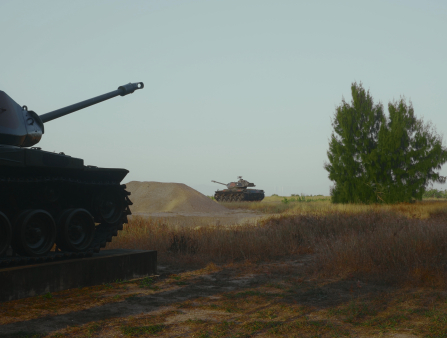
The cinematic forebears of Tiffany Sia’s Overt Listeningare plentiful. Both a road movie and a landscape film, Sia’s feature debut deftly and subtly applies the formal conventions of these genres toward a rumination on the hauntological traces of Taiwan’s predominantly military landmarks formed in the second half of the 20th Century.
Much of the film oscillates (with an editing
Much of the film oscillates (with an editing pattern akin to metric montage) between onscreen text and shots of topographic vistas that inform the viewer of a historical anecdote, particularly concerning the Battle of Guningtou and its impact on the island of Kinmen, situated roughly 6 miles east of the coast of China. That battle’s outcome heralded a covert form of warfare between the proxies of the East and West throughout the Cold War, and Sia considers these various methodologies, urging the viewer to take heed of the sights and sounds her camera captured during her four-day sojourn on the island. Consequently, the film’s use of split-screen footage from different vantage points of Sia’s car is made more potent by reducing the size of these shots within the frame.
The inextricable cultural and political machinations of China and the United States are finely woven throughout the film, with Taiwanese pop icon Teresa Teng looming largest as her hit single Tian Mi Mi (Sweet Honey)plays against tourists staring into Sia’s camera outside the Beishan Broadcasting Wall. Best of all is Wham! ’s historical significance in performing in China that I dare not spoil here; the way Sia incorporates footage from that concert serves as a temporal rupture in the film’s otherwise stringent attention to the present moment. Yet it also serves to foreground Sia’s stakes in tracing the humanity that lies beneath narratives that become subsumed within geopolitical power struggles, an artistic and political tendency that’s both generous and generative in equal measure.
Nick Kouhi is a freelance film critic whose bylines include Screen Slate, FilmmakerMagazine, Reverse Shot, and Millennium Film Journal. He has curated screenings and events at DCTV and the Museum of the Moving Image for ArteEast and is currently serving on the Selection Committee of True/False Film Fest