

This article is an automated aggregation of coverage from news outlets. Oureditorialsoffer in-depth analysis curated by the NewsCord team.
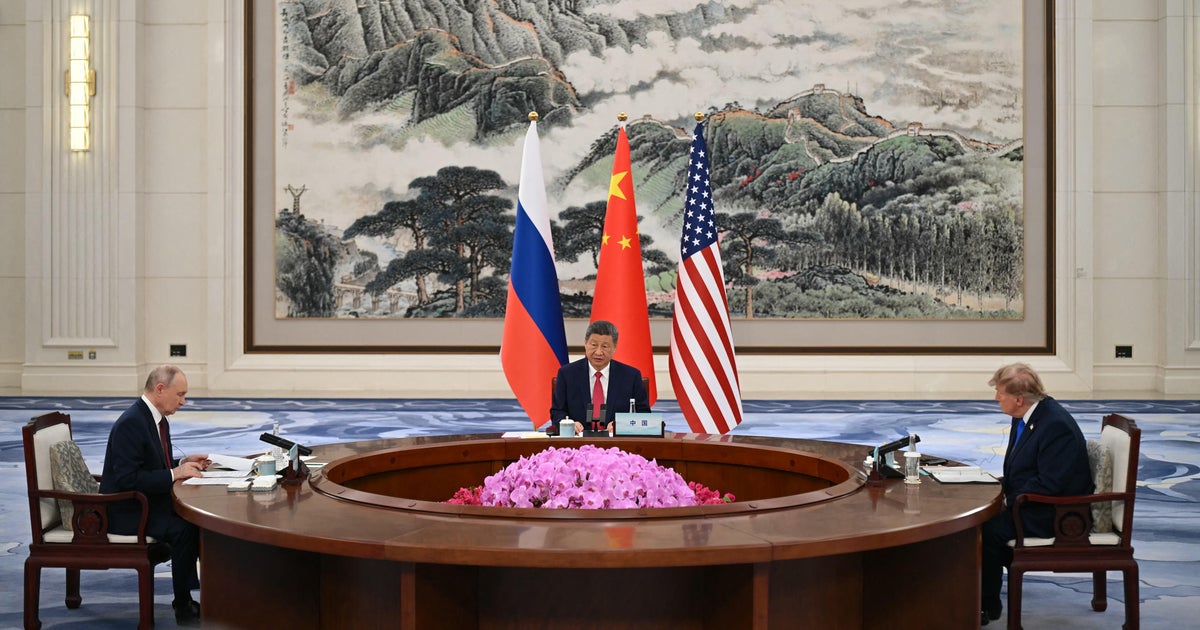
Three leaders met for first-ever trilateral talks in Shenzhen on APEC sidelines. They issued a declaration of peace outlining aims on nuclear risk, UN reform and energy.
Save coverage image
Read the story
Shenzhen Peace Declaration
Donald Trump, Xi Jinping and Vladimir Putin met for a first-ever trilateral talk in Shenzhen, China, on the sidelines of the Asia-Pacific Economic Cooperation summit, and they issued a joint declaration of peace after 90 minutes of talks. The declaration said the three leaders were “committed to reforming the UN so that it can respond more effectively to global challenges” and they planned to increase the production and supply of refined petroleum products. The declaration also stated that “nuclear war cannot be won and must never be fought” and it said the three countries would engage in dialogue to reduce nuclear risks and prevent the proliferation of nuclear weapons.
The declaration further flagged immunity for state officials and said the International Criminal Court and other similar institutions “must not abuse their jurisdiction”. While the leaders met in Shenzhen, the BBC reported that Kyiv was under attack from Russian drones as the talks were under way.
Reporting for this sectionBBCABC News
Debate Over Motives
Xi Jinping opened the trilateral by saying “positive interaction among major powers is not a matter of choice, but a mandatory requirement,” and Putin followed by highlighting a shared interest in ending the Ukraine war.
Trump closed by saying the presidents of three of the world’s largest countries have a “special responsibility” to maintain productive dialogue, and he said the three were “uniquely positioned” to discuss how to reduce the number of nuclear weapons on Earth.
Chuck Schumer criticized Trump on the Senate floor, saying “Trump calls the trilateral meeting with Xi and Putin ‘historic.’ Yes , it’s a historic embarrassment that people will remember long into the future,” and he added it was “a betrayal of the United States by a president who loves nothing more than to bow down to our adversaries for a photo op.”
Putin described the meeting as an “important chapter in the history of diplomacy,” and he said Ukraine and Europe were not yet ready to make compromises to resolve the conflict in Ukraine.
The BBC reported that Putin vowed a “far more painful” retaliation in response to Ukrainian attacks on the bridge connecting Russia to Ukraine’s occupied peninsula of Crimea.
What Comes Next
The declaration committed the three countries to reforming the UN, increasing refined petroleum production and supply, and engaging in dialogue on nuclear risks, while it also emphasized state consent and diplomatic immunity for officials. The Guardian reported that the declaration made no mention of the wars in Ukraine and Iran, and it said the statement stopped short of suggesting the beginnings of a framework for denuclearisation. The BBC reported that Trump said he would not make decisions about the Russia-Ukraine war without including Ukraine at the table, and Trump referred to Ukrainian President Volodymyr Zelenskyy as “the head of that country.”
The BBC also reported that Putin said Russia had invited EU representatives to Moscow to better understand Europe’s position, and it said Putin vowed a “far more painful” retaliation after the Crimea bridge attack. In Berlin, the France 24 live coverage said German Chancellor Friedrich Merz warned that a “Yalta format cannot bring peace” to Ukraine and said such talks “can only be successful with Ukraine and Europe.”
Reporting for this sectionThe GuardianFrance 24