


What Do Azerbaijan’s $88.55 Billion Reserves Mean For Its Economy? – Caspianpost.com
What Do Azerbaijan’s $88.55 Billion Reserves Mean For Its Economy?
- Seymur Mammadov
- 16 Nov, 16:51
- Opinion
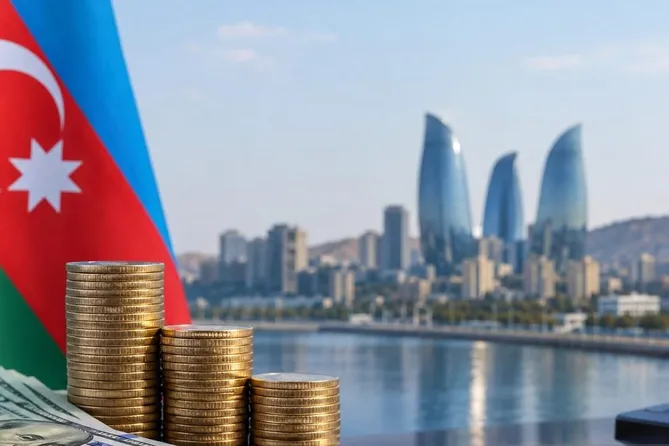
Azerbaijan’s strategic foreign exchange reserves exceed the country’s annual gross domestic product (GDP) and are nearly 20 times greater than its external public debt. In the first 10 months of 2026, the reserves increased by 4.1% to reach $88.55 billion.
The figures were presented during discussions of the draft law “On the State Budget of the Republic of Azerbaijan for 2027” at the Milli Majlis on Monday.
According to the information presented, the reserves are sufficient to finance 40 months of imports of goods and services. They are also 3.3 times greater than the broad money supply in manats and 20 times greater than direct external public debt, providing a substantial financial buffer to support macroeconomic stability and the stability of the manat.
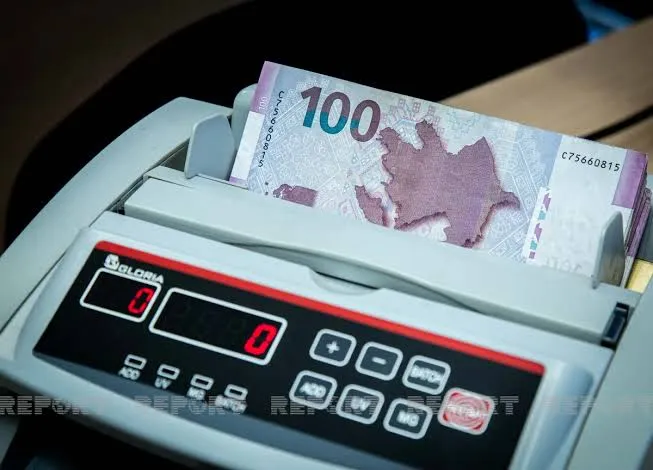
Over the past two decades, Azerbaijan’s strategic foreign exchange reserves have grown considerably, rising from $1.6 billion in 2003 to $88.55 billion in 2026, an increase of more than 55 times.
The country’s strategic foreign exchange reserves include the assets of the State Oil Fund of Azerbaijan and the foreign exchange reserves of the Central Bank of Azerbaijan (CBA).
The growth in Azerbaijan’s external reserves has coincided with a reduction in its external debt. The country’s external debt was at a particularly low level in the early 1990s, when the Azerbaijani economy was stagnating. Few plans or projects were being implemented, and economic activity was limited. This did not mean that the country had no need for borrowing, but conditions made it difficult to take on additional debt. International financial institutions also lacked confidence in Azerbaijan at a time when the country faced domestic political instability and the occupation of its territories.
Public debtbegan to increase alongside economic activity and the implementation of major projects.
Statistics previously published by the World Bank provide an overview of the evolution of Azerbaijan’s external debt. It should be noted that the World Bank’s figures refer to Azerbaijan’s total external debt, rather than direct public debt alone. They therefore include borrowing by various entities and the private sector.
Between 2005 and 2010, external liabilities increased rapidly as Azerbaijan’s economy underwent a major transformation. The oil boom was accompanied by infrastructure construction, energy sector development and the implementation of large-scale government programmes. Total external debt rose from approximately $2.2 billion to $7.2 billion during this period. Both government borrowing and private-sector liabilities increased.
External debt continued to grow between 2010 and 2015, reaching approximately $13.2 billion by 2015. This was driven by increased international financing for infrastructure projects and Azerbaijan’s growing presence in capital markets. In 2012, the country issued its first sovereign Eurobonds.
Azerbaijan’s total external debt peaked at $17.9 billion in 2018. Analysts note that the private sector, rather than the government, accounted for the largest share of the increase. The figures remained relatively stable over the following two years, before a sustained decline began in 2021. According to World Bank data, the reduction became particularly pronounced in 2024-2025.
The decline in the country’s debt obligations did not happen by chance. It was the result of a prudent fiscal policy, effective public debt management and the use of accumulated reserves.
One important factor was the replacement of external debt with domestic borrowing. Experts consider this one of the key elements of Azerbaijan’s debt strategy. The policy helps reduce dependence on foreign creditors, develop the domestic financial market and gradually change the structure of public debt.
Azerbaijan thus moved from relatively modest external debt in the mid-2000s to a substantial increase in external liabilities during a period of extensive economic and infrastructure development. In recent years, however, the country has consistently reduced its external debt.
This does not mean that Azerbaijan intends to abandon foreign borrowing altogether. Rather, as its own reeeds without external support in many cases
The fact that Azerbaijan’s foreign exchange reserves are 20 times greater than its external public debt points to the country’s capacity to undertake major initiatives using its own re
Speaking in parliament on Monday, Economy Minister Mikayil Jabbarov stressed that the economic results achieved in recent years under the leadership of President Ilham Aliyev had helped the country address its strategic priorities. Strengthening defence capabilities, carrying out large-scale reconstruction and construction work in the liberated territories, implementing social support packages and improving public welfare have all been financed through the country’s own re
“The most important point is that these objectives were achieved without borrowing, using the country’s own re
Substantial foreign exchange reserves provide Azerbaijan with a significant financial safety net. The ratio of reserves to external public debt demonstrates that the country has considerable capacity to meet its obligations. A low level of external public debt also gives the government greater room to pursue its future economic policy.
If necessary, Azerbaijan can raise additional funds for infrastructure, energy, transport and industrial projects without creating an excessive debt burden.
The main objective today is to diversify the economy and develop the non-oil sector using the savings accumulated from oil revenues in previous years.
You can contact us by entering your email address or number
Russia Aims to Make Electricity Cheaper Than China Until 2042
Kazakhstan Secures $1.2 Billion in Green Energy and Gas Projects at COP31
Belarusian President Arrives in Russia Ahead of CSTO Security Summit – VIDEO
Türkiye’s South Caucasus Policy: From Strategic Alliance to Lasting Peace
Kazakhstan Detains Heads of Samruk-Kazyna and National Railways
Türkiye’s Joint Defence Agreement with Pakistan and Saudi Arabia Enters Into Force
Kyrgyzstan Prepares for Presidential Election: What Do Citizens Expect from the Candidates?
Opinion
The South Caucasus Needs Its Own Vision of the Future
Opinion
Azerbaijan’s Economic Transition: Building Growth Beyond Oil and Gas

Opinion
What a Change of Government Could Mean for Israel and Its Regional Partners
Opinion
Türkiye’s South Caucasus Policy: From Strategic Alliance to Lasting Peace
Opinion
Can Azerbaijani Gas Strengthen Moldova’s Energy Security?
Opinion
Türkiye and Azerbaijan Can Help Make the Turkic World an Independent Geopolitical Force