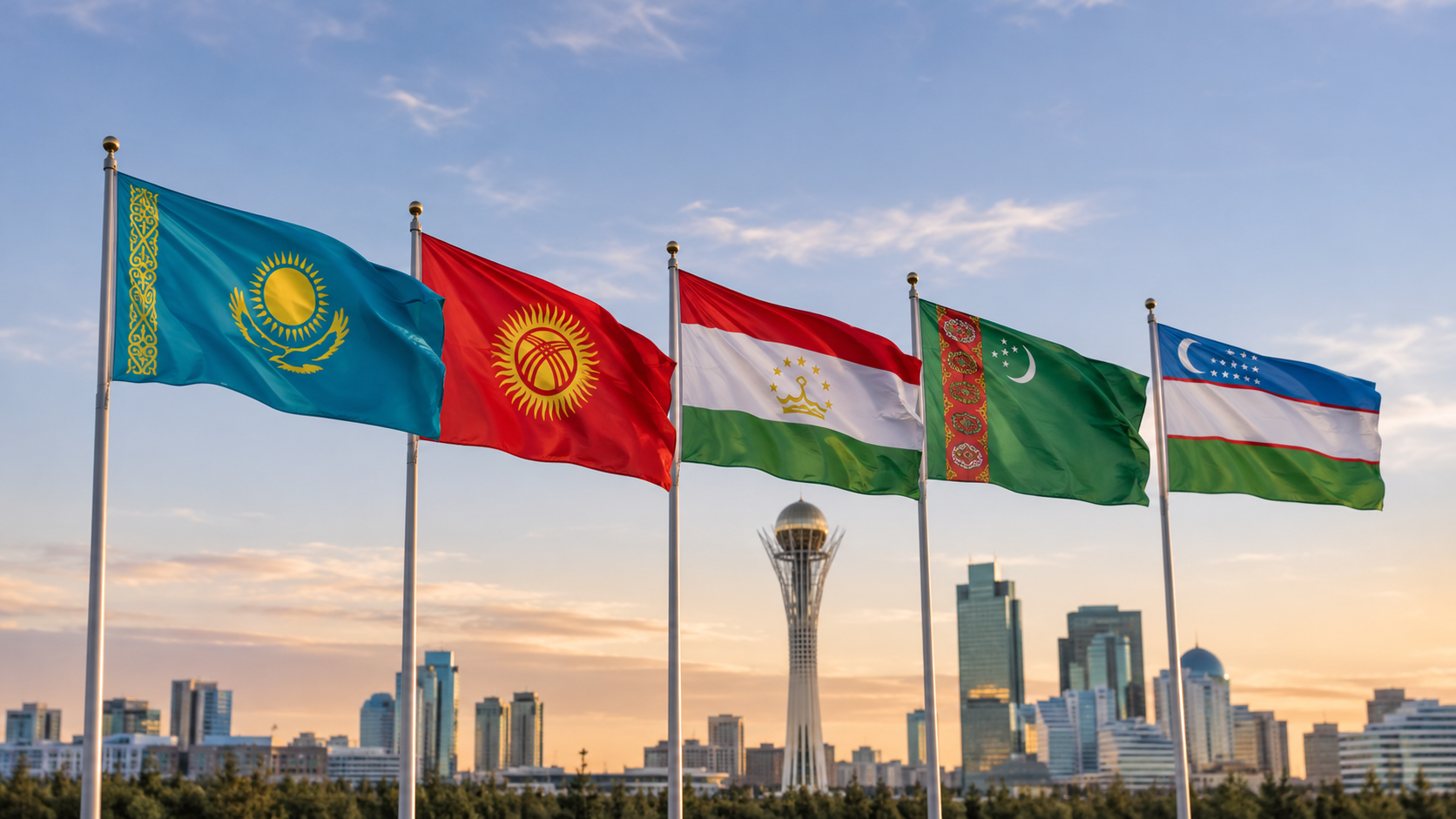

For years, Central Asia was largely interpreted through its relationships with Russia, China and the West. As the five countries pursue their own foreign policy priorities and deepen regional cooperation, analysts say Central Asia is seeking greater influence over how the region is understood abroad
The region is characterized today by stronger regional cooperation, diversified partnerships and broadening diplomatic initiatives. Experts say that building a distinct regional identity requires more than visibility or participation in global affairs.
Political analyst and international relations expert Murad Shamilov believes Central Asia is moving from reactive foreign policy toward more deliberate international positioning, although its ability to establish its own image globally remains a work in progress.
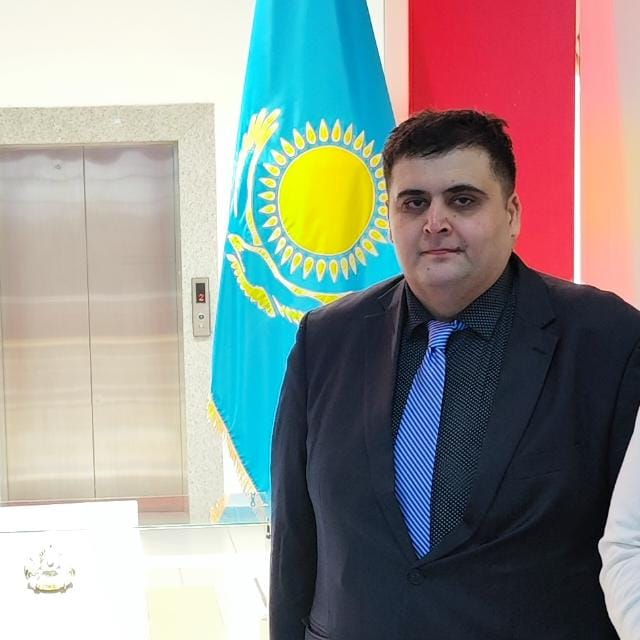
Murad Shamilov. Photo credit: Shamilov’s personal archive.
I see a transition from reactive foreign policy
“I see a transition from reactive foreign policy to conscious, independent positioning on the international arena,” he said, describing the region’s evolving approach. He noted that Kazakhstan and its neighbors are increasingly seeking to adapt to international processes while shaping both regional and global agendas.
Historically, the region’s image was largely shaped from outside, he said. Russia viewed it through historical, military-political and economic ties, China through transport connectivity and the Belt and Road Initiative, while Western countries often focused on energy re
“Thus, for a long time, the region was presented through the interests of those who were interested in its rev said
The growing engagement of Central Asian states
The growing engagement of Central Asian states with different international partners, alongside stronger regional dialogue, is changing this dynamic. Formats such asCentral Asia–China,Central Asia–European Unionand C5+1 have created additional channels for cooperation, while regionalconsultationsincreasingly allow the countries to coordinate their priorities.
“Central Asia is not the periphery of global politics and not a territory of geopolitical confrontation, but an independent region with its own interests, opportunities and long-term vision of development,” Shamilov said, describing the idea that could underpin a regional narrative.
Visibility is not the same as agency
Greater visibility in diplomatic meetings and international forums may signal greater influence, but visibility alone does not necessarily mean that its countries are setting the terms of engagement.
Filippo Costa Buranelli, an associate professor of international
Filippo Costa Buranelli, an associate professor of international relations at the University of St. Andrews, said Central Asia has made considerable progress in developing a shared regional identity over the past decade. He described it as rooted in sovereignty, mutual non-interference, diplomacy, peaceful dispute resolution and a shared understanding of regional challenges, including climate change.

Filippo Costa Buranelli. Photo credit: his personal archive.
That identity is neither fixed nor uniform, with individual countries and societies maintaining distinct characteristics and national priorities.
“The task for the region is to ensure that external perceptions of it are on the same page as the internal perceptions,” Buranelli said.
This gap between how a region sees itself
This gap between how a region sees itself and how others perceive it remains central to the narrative debate. International actors may recognize Central Asia as a rethese descriptions risk reducing its identity to its utility for others
Buranelli highlighted that some geopolitical descriptions, including references to the “New Great Game” or the region as the “backyard of the great powers,” are increasingly being challenged.
“Central Asia is a re things – a space of traditions, of ideas, of social development and emancipation, of growth and of innovation, a space where ordinary people live, work, and cultivate their ambitions,” he said
The limits of a common regional voice
Developing a shared narrative does not necessarily require
Developing a shared narrative does not necessarily require Central Asian countries to speak with one voice on every issue. Their political systems, economies, national priorities and approaches to international relations differ.
Shamilov noted that a common narrative should instead emerge from shared strategic interests, without replacing national identities. Regional consultations among Central Asian leaders, including expandeddialogueinvolving Azerbaijan, reflect growing efforts to coordinate positions and respond collectively to challenges, although they do not amount to a supranational political structure.
Buranelli similarly cautioned against equating regional agency with acting as a single bloc. Central Asian states may cooperate in certain areas while diverging in others, and these differences do not necessarily undermine their collective influence.
Regional agency is linked to the idea
“Regional agency is linked to the idea that somehow all regional states agree to behave as a single actor. On a broad level, this may be true in some spheres, but not always it is like this. And guess what, it is fine,” he said.
For Buranelli, agency is less about uniformity than about the ability to advance and defend one’s priorities. It requires ownership of initiatives, the capacity to implement them and a willingness to establish what is acceptable in relations with other countries.
He added that Central Asian states can engage with major powers without necessarily acting as subordinate partners, including by securing concessions, obtaining support for regional initiatives and ensuring that cooperation delivers tangible benefits for their populations.
Looking inward instead of outward
While Shamilov and Buranelli examine regional identity, diplomatic
While Shamilov and Buranelli examine regional identity, diplomatic positioning and the relationship between external perceptions and local priorities, Temur Umarov, a fellow at the Carnegie Russia Eurasia Center, approaches the issue from a different angle at a recentdiscussion, organized by CAPS Unlock agency. He highlights that discussions about Central Asia too often begin and end with developments outside the region, overshadowing political changes and initiatives originating within it.
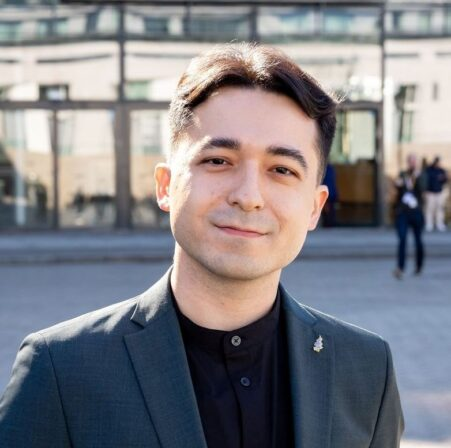
Fellow at the Carnegie Russia Eurasia Center Temur Umarov. Photo credit: carnegieendowment.org
“I want to again bring us back to Central Asia because a lot of times when we talk about how Central Asia is changing, how Central Asia’s cooperation with China is going through the changes, I do believe that we pay too much attention to what is happening outside of Central Asia, not so much to what is actually happening here,” Umarov said.
He believes this tendency distorts the understanding of regional developments by treating events such as the Ukrainian conflict or growing United States-China rivalry as the primary forces shaping Central Asian decisions.
The initiative in that activity is not coming
“The initiative in that activity is not coming from Washington,” he said, highlighting that regional political elites themselves are using available tools to attract international attention and expand cooperation.
Umarov sees the increasingly confrontational international environment not only as aies to exercise greater agency. Their position between major powers allows them to diversify partnerships, negotiate with different actors and fill gaps in a changing international order
He also pointed to China’s growing presence in the region as an example of how adaptability can shape international influence. In his view, Beijing’s flexible approach has helped it expand engagement, while Russia’s more rigid limitations in certain areas constrain its ability to deepen ties despite its historical connections with Central Asia.
From geopolitical interest to regional ownership
The growing international attention to Central Asia presents
The growing international attention to Central Asia presents both an opportunity and a challenge. Interest in critical minerals, energy rent, partnerships and diplomatic leverage. But it can also reinforce narratives that portray the region primarily as a strategic prize
Shamilov said the region’s growing geopolitical and economic importance has yet to translate into a stronger voice in international media and policy debates. Coverage often portrays the region as an arena for competition among Moscow, Beijing, Ankara, and Washington, among others.
Buranelli said international actors are increasingly recognizing Central Asia’s own ambitions. The challenge, however, is to retain control over how those ambitions are represented.
The five Central Asian countries do not need
The five Central Asian countries do not need one uniform narrative shared identically by all five countries. They can identify shared interests, pursue joint projects and ensure partnerships reflect their own priorities while preserving national differences.
Ultimately, the battle for narratives is not only about changing how the world talks about Central Asia, as it is about strengthening the region’s ability to shape what happens within it and ensuring that international attention becomes an opportunity for influence, rather than another framework imposed from outside.
Get The Astana Times stories sent directly to you! Sign upgram, YouTube and Tiktok!