


- Animals
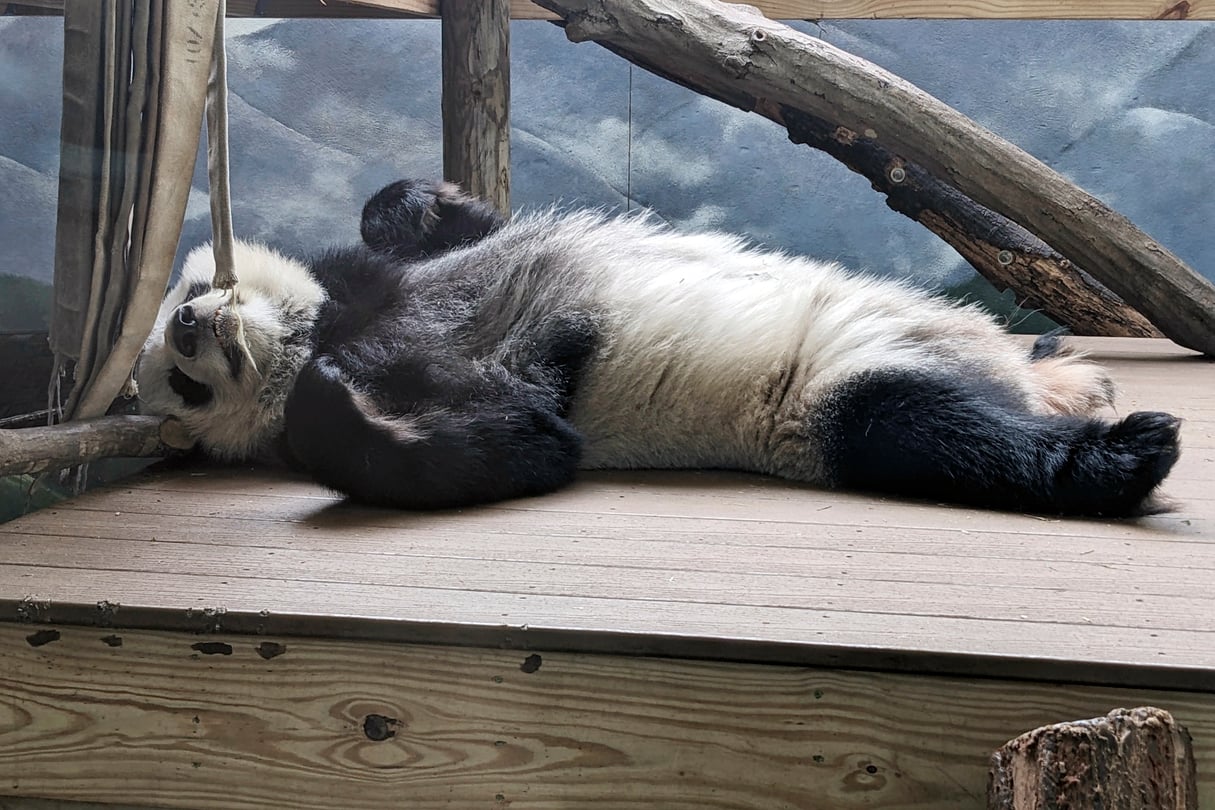
Giant, fuzzy, black-and-white six-year-olds rolling around Zoo Atlanta might be the best thing the U.S. and China have going, geopolitically speaking.
Chinese President Xi Jinping announced the return of appropriately picky giant pandas to Zoo Atlanta in September. For zoo-goers, it was an exciting milestone. For international relations experts, it was something else.
“They ran out of positive things to say in the summit meeting other than panda bears,” said Fei-Ling Wang, a professor of international affairs at Georgia Tech. “Arguably it’s great. But for the two countries, the pandas are a small issue, but that’s only concrete stuff there.”
Ping Ping, a male, and Fu Shuang,
Ping Ping, a male, and Fu Shuang, a female, were born in China at the Chengdu Research Base of Giant Panda Breeding. They’re in Atlanta through a research agreement on Giant Panda Conservation between Zoo Atlanta and the China Wildlife Conservation Association.
“The Chinese government actually has been consciously, intentionally using its monopoly for power play,” Wang said. “That’s also a part of panda diplomacy.”
Wang said the September summit between the two presidents happened at a tense moment in U.S.-China relations. China’s GDP is projected to overtake the United States’, its naval fleet is set to become the world’s biggest, and China is seen as a reason for U.S. suffering in terms of job and manufacturing loss.
This use of these rare, very popular animals
“This use of these rare, very popular animals to develop or exercise so-called soft power on an international stage because having a monopoly of owning these panda bears gives you the power,” Wang said.
So, cue the panda bears.
“They almost accidentally hit upon an animal that just in and of itself has huge attractive appeal around the world, but maybe particularly in the U.S.,” said Susan Brownell, a professor of anthropology at the University of Missouri–St. Louis. “It’s so cute, it seems cuddly, it’s bumbly, it’s amusing. It’s kind of fun to watch, even if it’s just sitting there slumped up against a wall.”
Brownell said panda diplomacy really kicked into gear in the 1970s after years of Communist-led China’s exclusion from the world stage due to worldwide hesitation around communism.
It’s an extremely ancient tradition in China going
“It’s an extremely ancient tradition in China going all the way back to the Zhou dynasty or even Shang dynasty, when the rulers would send exotic animals to each other,” she said.
In 1972, after President Richard Nixon visited China, the country gifted the U.S. two giant pandas. Nixon sent musk oxen as a return gift.
Brownell said China was looking for ways to formalize relationships that were not banned, like through participating in ping-pong and other international sport competitions, art and music exchanges, and eventually, pandas.
They had been excluded from traditional conventional diplomatic
“They had been excluded from traditional conventional diplomatic channels for so long that they were seeking non-political other means to create diplomatic relationships with nations that had been rejecting them ever since the success of the communist takeover in 1949,” she said.
Zoo Atlanta’s newest residents are joining a nearly 30-year relationship between the city’s zoo and the Chinese government’s panda program.
Atlanta is one of only three zoos in the U.S. to have Chinese pandas on exchange, and the only zoo in the Southeast.