

Although many issues fall clearly within the scope of the First Amendment, others, like the issue of ads paid for by the government in Common Cause v. Department of Homeland Security (2026), might be characterized as First Amendment-adjacent.
Judge Jennifer L. Rochon of the U.S District Court for the Southern District of Columbia, ordered the U.S. federal government on Oct. 11, 2026, to end its financing of ads that were designed to glorify U.S. President Donald Trump and his policies prior to important 2026 mid-term elections.
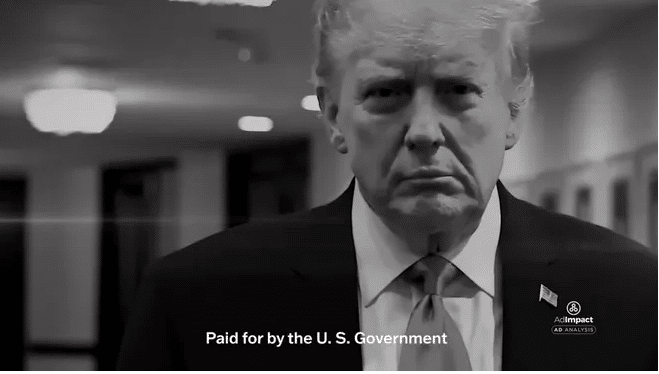
According to plaintiffs, the advertisements had been played 13,972 times, had generated about 1.39 impressions and had cost an estimated $12.6 million of an anticipated $20 million. The ads contained a caption indicating that they were funded by the government. Common Cause and other plaintiffs argued that the advertisements were not only illegal but that they had unfairly disadvantaged Trump’s political opponents.
The court characterized the ads as propaganda. They had been financed from the budget of the Department of Homeland Security and other agencies with money that had been allocated for other purposes.
Laws prohibiting such ads
The advertisements and the problems they posed were described in detail in the complaint filed four days before the court’s order. The complaint alleged that Congress had not appropriated money for the advertisements and that the Hatch Act that prohibits federal officials from using their position to engage in political activities. The complaint also noted other laws that limited federal expenditures to those specified by law.
The five advertisements were respectively titled “The Country He Loves,” “Celebrating the Enduring Spirit,” “Final Battle,” “To the Great People of Iran” and “Manduro.” The advertisements, at least one of which was from an earlier campaign ad for Trump, not only praised him and his achievements, but also described his opponents as socialists and communists.
Subsequent actions
Trump had claimed that going forward these advertisements would be funded by his own MAGA Super PAC, but he apparently planned to continue using government financing until reaching the $20 million mark.
Although the judge ordered the ads to cease on the evening she issued her decision, they appear to have continued past the deadline.
Whereas other recent controversies have involved the government’s failure to spend funds it had allocated, this involves government expenditures for purposes other than which they were designated and possibly contrary to prohibitions against them. The case could pose a clear conflict between legislative and executive powers.
John R. Vile is a political science professor and dean of the Honors College at Middle Tennessee State University.