
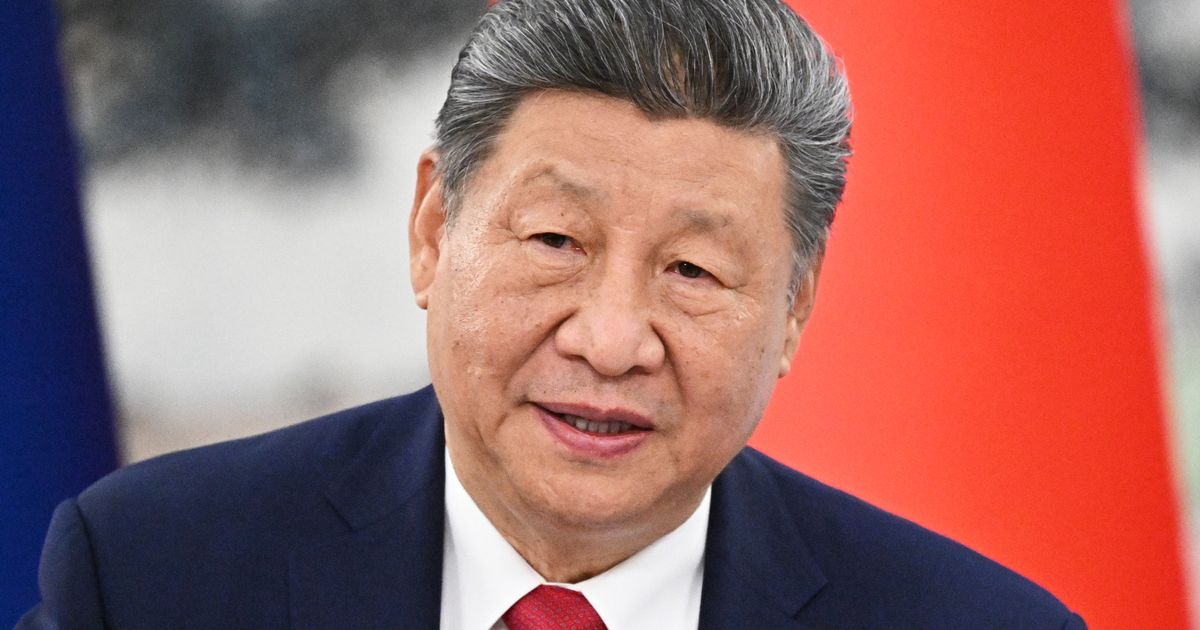





Sandra Rios: “The crisis in Paraguay is causing institutional and economic instability” — Foto: Leo Pinheiro/Valor
Recent political turmoil in Paraguay, which led to President Santiago Peña’s impeachment after the collapse of Ueno Bank, and strained relations between Brazil and Argentina could hamper Mercosur’s ability to pursue a broader integration agenda, including new trade agreements and cooperation initiatives, according to experts interviewed by Valor.
- Brazil says it expects to work with Paraguay’s vice president
- Brazil-Argentina trade seen holding up despite Lula-Milei rift
- Isolated by South America’s right, Brazil should pursue pragmatism
Despite the short-term difficulties, analysts say trade among the bloc’s members remains robust, even after years of fluctuations. Given that track record, they do not expect the current political tensions to significantly disrupt trade flows within Mercosur.
Argentina remains Brazil’s largest trading partner in Latin America and its third-largest export market, behind China and the United States. Paraguay, meanwhile, is an important destination for Brazilian corporate investment and shares the Itaipu hydroelectric complex with Brazil, the country’s largest binational infrastructure operation.
Brazilian exports to Argentina totaled $13.1 billion
Brazilian exports to Argentina totaled $13.1 billion from January through October this year, down 17.2% from the same period in 2025. For 2025 as a whole, shipments to Argentina reached $18.1 billion, up 31.4% from 2024, according to Brazil’s Foreign Trade Secretariat. Brazilian imports from Argentina totaled $12.9 billion last year, down 4.73% from the previous year.
In Paraguay’s case, Brazilian exports reached $3.6 billion from January through October, an increase of 9.09% from the same period in 2025. For the full year, Brazilian sales to Paraguay totaled $4 billion, up 5.26% from 2024. Brazil also imported $3.4 billion in goods from Paraguay in 2025, down 2.85% year over year.
Economist Sandra Rios, director of the Center for Integration and Development Studies (Cindes), says the crisis in Paraguay is creating considerable short-term institutional and economic instability. She argues, however, that its effects are more likely to be felt in the immediate political environment than in Mercosur’s medium- and long-term integration prospects, both during the remainder of President Lula’s current term and in his next administration. “The outlook was already being negatively affected by differences in political orientation among the member countries, particularly between the two largest [Brazil and Argentina],” she said.
Rios expects negotiations with countries outside Mercosur
Rios expects negotiations with countries outside Mercosur to remain a priority for the bloc. Diversifying trading partners, she said, is important in responding to protectionist pressures. “Mercosur has several negotiations underway. Asian countries with major markets, such as those in ASEAN [Association of Southeast Asian Nations], should receive particular attention in the coming years.”
José Niemeyer, a professor of international relations at business school Ibmec in Rio de Janeiro, believes the latest crisis in Paraguay will test Mercosur’s institutional resilience. He noted that Brazil has historically played a crucial role in making major agreements possible, including the strategic partnership between Mercosur and the European Union. The new political environment, he said, will also test the strength of Brazilian foreign policy.
“This crisis in Paraguay will be a good case study for Brazilian diplomacy to make it increasingly clear to Paraguay that Brazil is an important partner, just as partnerships with Argentina and Uruguay are important. And [Brazil must work to ensure] that Mercosur remains strong and united so it can implement what will be the world’s largest trade agreement, the one between Mercosur and the European Union,” Niemeyer said.
Despite Brazil’s Foreign Ministry’s efforts, the analyst points
Despite Brazil’s Foreign Ministry’s efforts, the analyst points to another threat facing the bloc: interference from the United States. He argued that, under President Donald Trump, Washington has sought to undermine such agreements.
“President Trump doesn’t like these blocs because, as the United States loses relative power in the international system, blocs such as Mercosur, the European Union and NAFTA [the North American Free Trade Agreement, replaced by the USMCA in 2020] limit the United States’ ability to act more aggressively and assertively on a range of international issues,” José Niemeyer said.
Fabio Giambiagi, an associate researcher at Fundação Getulio Vargas (FGV), said the current political environment is narrowing the bloc’s prospects for expansion because member governments struggle to coordinate policies. “The impact is that expansion opportunities are being frustrated. Trade continues, but the prospects for greater cooperation in different areas are being undermined,” he said.
According to Giambiagi, Mercosur was already showing signs of “institutional near-paralysis” even before the current tensions between Brazil and Argentina. He acknowledged, however, that the deterioration in bilateral relations makes it harder to develop a common agenda. The problem, in his view, lies not in trade itself but in the bloc’s ability to make decisions and move into new areas of cooperation. “Trade will continue, but there is no progress on an economic agenda that has been stalled for a long time.”
Nevertheless, he believes the Mercosur-European Union agreement has
Nevertheless, he believes the Mercosur-European Union agreement has opened up new prospects for the bloc by demonstrating that major international negotiations can be concluded after years of limited progress. Maintaining that momentum, however, will depend on political coordination among member countries.
José Alfredo Graça Lima, vice chairman of the board of trustees of the Brazilian Center for International Relations (Cebri), also emphasizes the importance of the agreement with the EU. “The bloc moves forward through the eventual confirmation of the agreement with the European Union and the conclusion of new trade agreements,” he said. In his view, domestic political crises and ideological differences among governments have not prevented Mercosur from functioning. “Internal crises of any kind in the bloc’s member countries have never affected Mercosur’s functioning, either as a subregional integration bloc or as a partner in agreements with third countries.”
Economic relations, Graça Lima added, are driven mainly by businesses and private-sector participants, whose interests endure through political crises. “Trade is conducted by economic actors, who are pragmatic by definition,” he said. He added that Mercosur should continue pursuing trade agreements with Asian countries, “which are already more important
This article was translated from Valor Econômico using
This article was translated from Valor Econômico using an artificial intelligence tool under the supervision of the Valor International editorial team to ensure accuracy, clarity, and adherence to our editorial standards. Read our Editorial Principles.
Mais recentePróximaLula govt sees Trump’s midterm setback as chance to mend U.S. ties